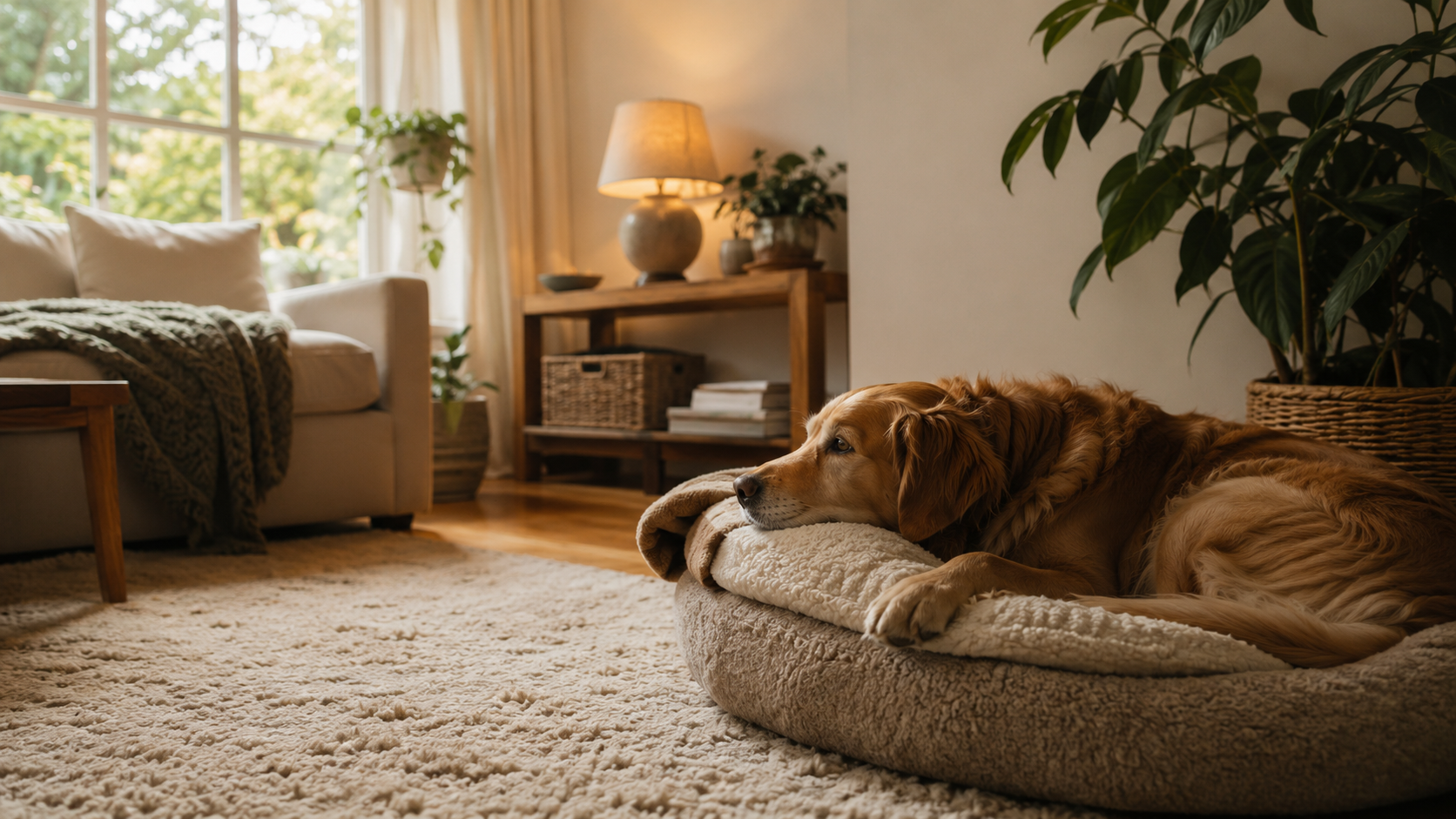




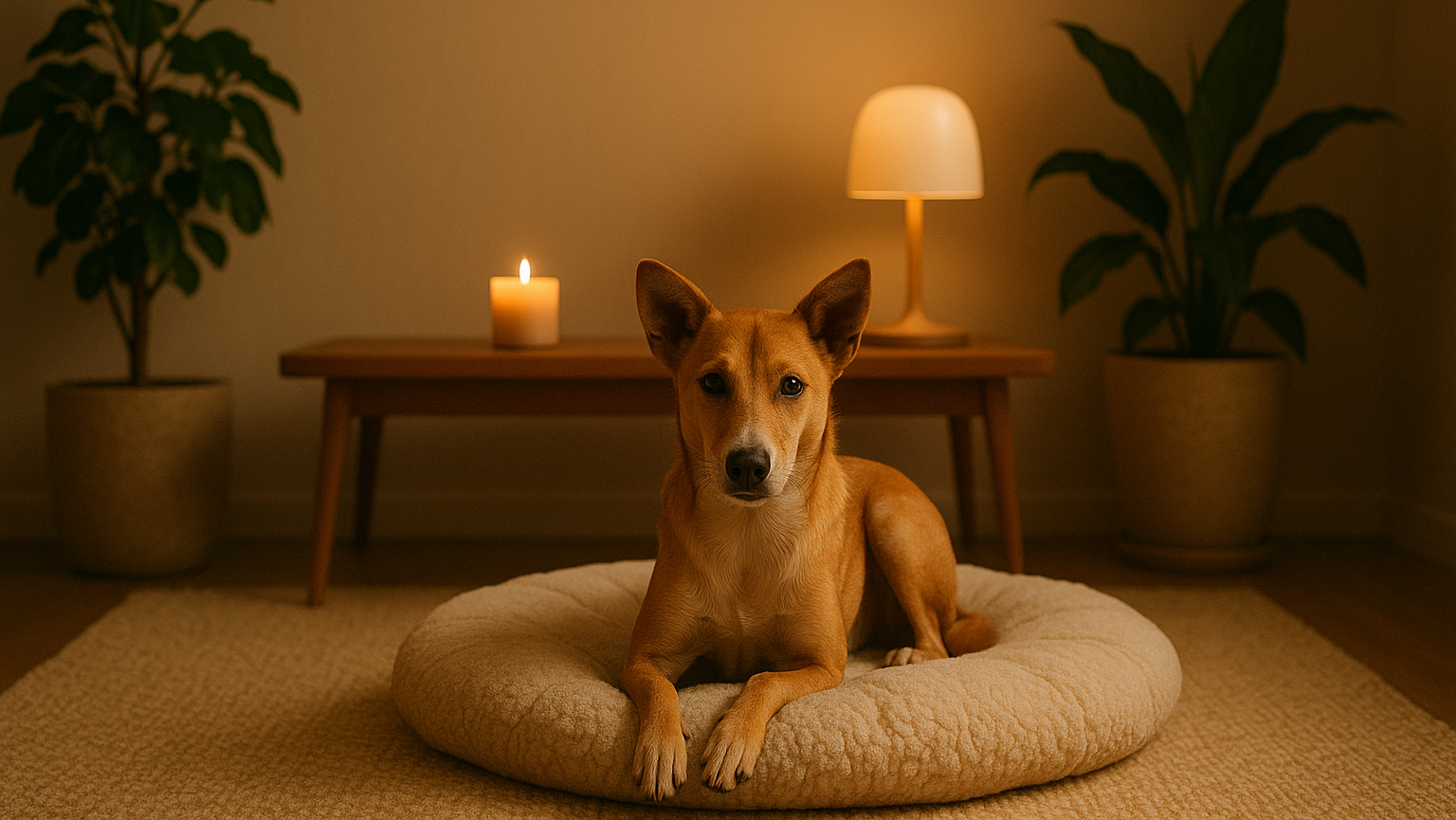
After a long day filled with noises, visitors, and activity, pets, just like people, need time to slow down. Their days are shaped by our movements, our moods, and the rhythm of our homes. When evening comes, a quiet and predictable end to the day helps them feel safe and emotionally balanced. This is where a calming routine for pets becomes essential.
Modern living often makes it difficult for pets to unwind naturally. Doorbells ring late, screens stay bright, and the energy of the house rarely settles before bedtime. Many pets remain alert long after their owners start to relax. Over time, this can affect both sleep and emotional stability. An intentional evening routine for pets helps restore that missing structure. It signals that the day is ending and that it is time to rest.
A nightly rhythm benefits more than just their behavior. It supports their overall well-being. In animal behavior studies, pets who follow predictable schedules show lower anxiety levels and better adaptability to change. They learn that quiet moments are safe and that rest is part of their day, not a reaction to exhaustion. This sense of security is the foundation of mindful pet care and contributes directly to pet wellness.
Creating a peaceful setting does not require complicated steps. It is about slowing down together, dimming the lights, softening your voice, and helping your pet release the energy of the day. Many families find comfort in creating a pet calm corner, a quiet space where pets can settle before sleep. Over time, it becomes their safe spot, one that represents comfort, familiarity, and calm.
In this guide, we will explore how to build that evening rhythm at home through gentle sensory cues, music, lighting, and presence. The goal is not perfection. It is about giving your pet a calm, consistent environment where they can unwind, feel secure, and prepare for rest.
Understanding Evening Restlessness in Pets
Evenings can be tricky for many pets. After spending the day reacting to household sounds, street noises, or periods of separation, some animals struggle to settle down when the house finally quiets. This restlessness often shows up as pacing, whining, excessive grooming, or sudden bursts of energy. Understanding why this happens is the first step in creating a consistent evening routine for pets that supports emotional stability.
For dogs, evening restlessness is often tied to overstimulation. Throughout the day, they process countless scents, sounds, and movements. When these stimuli stop suddenly, they do not always know how to switch off. Some may bark at distant noises, while others chew or seek attention just to release tension. Cats, on the other hand, are naturally more active during twilight hours. Without structured play or environmental enrichment, their energy can build up into frustration or agitation.
Environmental factors also play a big role. Bright lights, televisions, or household chatter can keep pets in a heightened state of awareness. In apartments and urban homes, constant background noise adds to that overstimulation. When pets lack a predictable structure at night, their bodies do not receive the signals that say, “It is time to rest.” That is where a gentle calming routine for pets becomes important.
Establishing a pattern helps your pet transition from active alertness to calm rest. You might notice that when you lower your voice or dim the lights, your pet starts to yawn or stretch. This is their body responding to environmental cues. Over time, these small signals create emotional memory, which helps regulate their energy and reduce anxiety.
When pets are unable to relax at night, it is not misbehavior; it is communication. They are expressing an unmet need for structure, safety, and calm. Recognizing these signs allows you to create a calming space for pets that helps them feel secure and ready to rest.
The Power of Predictability in Pet Wellness
Predictability is one of the simplest yet most powerful tools for maintaining pet wellness. Animals find comfort in knowing what comes next. Their emotional world thrives on patterns and familiar signals. When meals, walks, and quiet time happen around the same schedule, pets begin to feel secure within that rhythm. This consistency acts as an emotional anchor, grounding them through the noise and unpredictability of modern life.
Think of your daily structure as invisible reassurance. When you wake up at a similar time, greet your pet gently, and feed them in a calm setting, you start their day on a stable note. The same applies to the evenings. A fixed pet bedtime routine or pet wellness ritual teaches them that after a certain series of cues – dimming lights, lowering your tone, playing soft sounds, the rest is safe and expected.
Scientific observations in animal behavior show that consistent routines help regulate cortisol, the hormone linked to stress. When cortisol remains balanced, pets experience fewer mood fluctuations and sleep disturbances. This is especially true for dogs who rely on human cues for timing. When they know when you will walk, feed, or rest, they can align their own internal rhythm with yours.
For cats, predictability can reduce territorial stress. Simple signals, like turning off certain lights or closing a specific curtain before bedtime, can act as triggers that communicate safety. Over time, these rituals evolve into emotional memory, which helps shape a calmer, more trusting temperament.
A natural calming routine for pets does not need to be rigid. It simply needs to be consistent enough to make them feel that the day flows in an expected way. Predictability lowers anxiety, strengthens the bond between pet and parent, and becomes the quiet framework of mindful pet care.
The Calm Corner Ritual: Turning Routine into Connection
A routine becomes powerful when it turns into a ritual. The pet calm corner is not just a place. It is a shared practice that strengthens trust and emotional connection. The goal is to turn the end of each day into a predictable, calming experience that brings both you and your pet into the same peaceful rhythm.
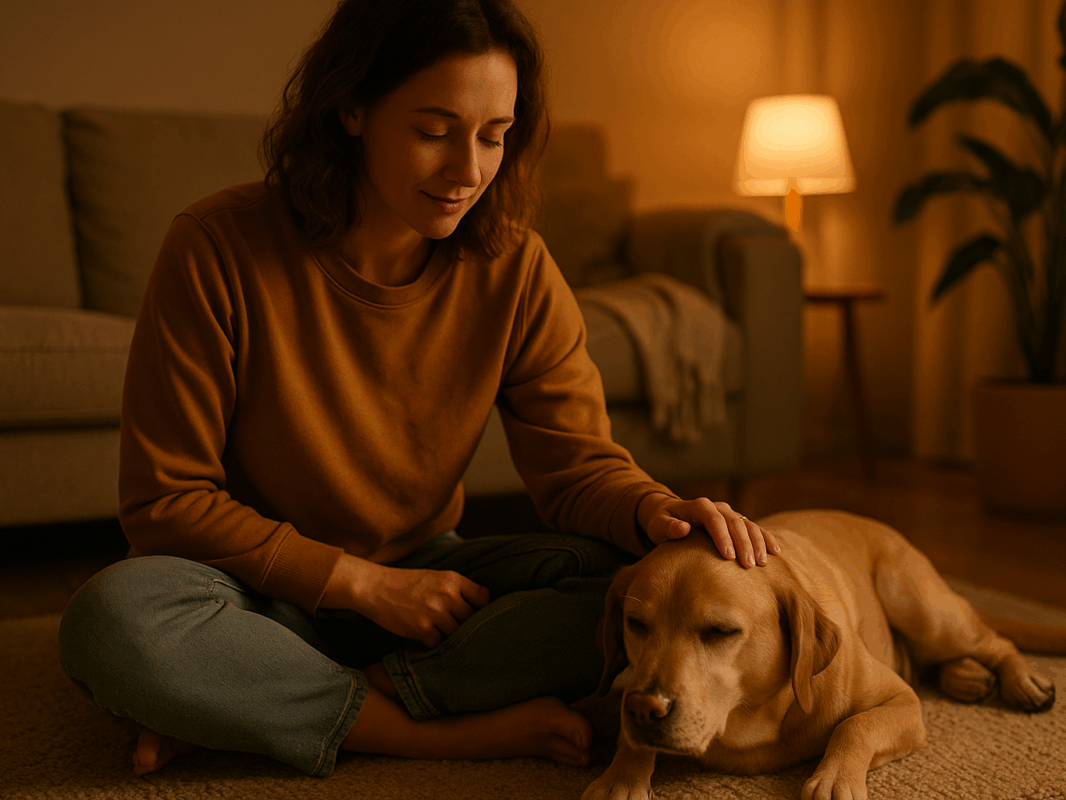
Start by setting aside ten to fifteen minutes every evening to wind down together. This is not playtime or training. It is quiet presence. Sit with your pet in their calm space and focus on simply being there. Speak softly, breathe slowly, and let your energy settle. Your stillness communicates safety far more effectively than words. Over time, your pet will begin to recognize this as their cue that the day is ending and that it is time to relax.
Incorporating gentle sensory elements enhances the experience. Soft lighting, low music, and subtle scents from pet therapy candles can help create a peaceful atmosphere. Remember that these candles are environmental cues, not solutions. Their purpose is to complement your calming routine for pets, helping your pet associate the same combination of sounds, smells, and sights with comfort. Always keep candles at a safe distance, ensure good airflow, and keep sessions short.
The magic lies in repetition. When you create the same calm environment each evening, your pet develops emotional memory. Over time, the familiar steps such as dimmed lights, calm tone, and soft background sound become signals of peace. This small pet relaxation routine helps reduce evening anxiety and improves emotional balance.
This ritual also benefits you. Slowing down with your pet offers a pause from digital noise and constant motion. It grounds you both in the moment. That shared quiet strengthens your relationship and supports mindful pet care, where wellness is not about products but about presence.
When practiced regularly, the pet calm corner becomes a symbol of stability. It reminds your pet that calm is always available and that rest is part of love, not isolation. In those few minutes of stillness, you are not just caring for them. You are connecting with them.
Setting the Scene: How to Create a Calming Space for Pets
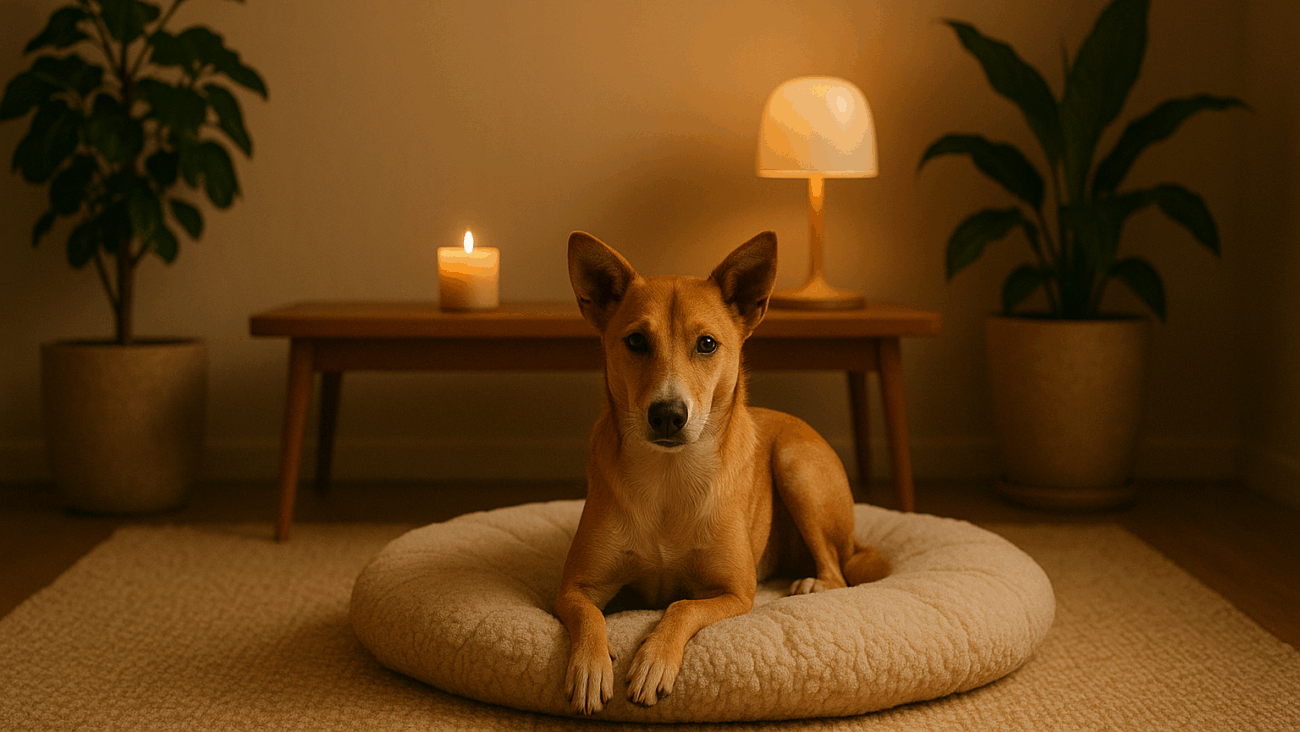
Creating a calming space for pets is one of the most rewarding parts of evening care. It is where your pet learns to associate certain sights, sounds, and scents with comfort. A well-prepared environment tells them it is time to unwind, helping them release the tension of the day. You do not need to redesign your home. Small, thoughtful changes can make a world of difference in your pet relaxation routine.
Step 1: Choose the Right Spot
Select a quiet area in your home that feels naturally peaceful. Avoid doorways, windows that face busy streets, or areas with constant movement. The ideal space should have minimal noise and consistent lighting. This becomes your pet calm corner, a personal sanctuary where your pet can rest without interruption.
Step 2: Adjust Lighting and Temperature
Lighting plays a big role in emotional comfort. Switch to warm, dim lighting in the evening. Bright LEDs can keep pets alert longer than necessary. Soft yellow or amber tones create a soothing atmosphere that supports their natural sleep cycle. Keep the temperature pleasant and stable. Sudden shifts in air from fans or air conditioners can make it difficult for pets to relax fully.
Step 3: Add Sound and Music
Soft background sounds can ease anxiety and mask sudden noises that startle pets. Many studies suggest that gentle classical or acoustic music can help lower heart rate and calm nerves in both dogs and cats. You can experiment with white noise or nature sounds to see what your pet responds to best. Include this as part of your evening routine for pets, especially if your home tends to stay active after dark.
Step 4: Familiar Comforts
Bring in items that make your pet feel at home. A well-used blanket, a favorite toy, or even an old T-shirt with your scent adds familiarity. These small details turn a corner into a safe zone. Comfort objects are essential parts of a pet wellness ritual, offering emotional reassurance through scent and touch.
Step 5: Subtle Scent and Sensory Touches
Aromas can influence mood, but they must be gentle and pet-safe. If you use pet therapy candles, place them in open areas far from where your pet sits or sleeps. Always ensure ventilation, short burn times, and never leave candles unattended. Scents like lavender or chamomile are known to promote calmness when used responsibly. Scent should never overpower; it should complement a peaceful atmosphere and support mindful pet care.
Each of these steps helps shape a calm, sensory experience. The goal is not to eliminate every sound or distraction but to create an environment that feels safe, predictable, and restful. When done consistently, this space becomes your pet’s quiet signal that the day is done, and peace can begin.
Personalizing the Pet Relaxation Routine
No two pets are exactly alike, and that is what makes caring for them so special. A routine that calms one dog may not have the same effect on another. The same applies to cats, who each have their own preferences for space, sound, and comfort. Personalizing your pet relaxation routine means paying close attention to how your pet responds and shaping the environment to suit their emotional needs.
Start by observing their natural behavior. Some pets unwind best with soft background music, while others prefer silence. Notice how your pet reacts when the lights dim or when you switch to quieter activities in the evening. Small gestures, like lowering your voice or offering gentle touch, can help you discover what works best for them. These cues help you design a pet bedtime routine that truly fits their temperament.
Comfort items also play a big role. A favorite blanket, a well-loved toy, or your scent on a piece of fabric can provide reassurance. Cats may enjoy curling up near warm spots, while dogs might prefer their bed placed in the pet calm corner where they can still see you. These familiar details tell them that they belong, making the space more emotionally grounding.
As you refine your routine, remember that it does not have to be complex. The best pet comfort tips focus on stability rather than stimulation. A calm setting, steady presence, and short moments of connection are enough. Be flexible with timing too. Some pets unwind right after dinner, while others need play or a short walk before settling. Follow their cues and let your mindful pet care evolve naturally.
The most important part is consistency. When you repeat the same steps every evening, your pet learns to anticipate peace. This predictability builds trust, lowers anxiety, and strengthens your emotional bond. Over time, your pet relaxation ideas will turn into habits that create lasting emotional balance.
The Role of Human Energy in Mindful Pet Care
The calm you bring into a room matters more than anything you place in it. Pets are deeply intuitive and pick up on even the smallest shifts in tone, posture, or energy. When you are relaxed, your pet feels it. When you are anxious or hurried, they sense that too. Emotional energy transfers easily between humans and animals, which is why calm, intentional presence is one of the most powerful parts of mindful pet care.
Think of your energy as a mirror. If you come home stressed and move quickly through your evening routine, your pet may stay alert and restless. But when you slow your breathing, soften your voice, and move gently, your pet naturally begins to match that rhythm. Dogs often sigh or stretch when their owners relax. Cats may start to purr or settle nearby. This is how emotional synchronization works in daily life.
Part of creating a calming space for pets is creating calm within yourself. Take a few minutes before the pet relaxation routine to center your energy. You might sit quietly, take deep breaths, or put away distractions. The more peaceful your state, the easier it becomes for your pet to trust the environment. This exchange is not about control; it is about shared regulation. When you remain consistent, your pet learns that your presence equals safety.
Studies in human-animal interaction have shown that when owners maintain calm energy, pets exhibit lower heart rates and reduced signs of anxiety. It proves that pet wellness begins with human wellness. Your emotions set the tone for theirs, especially during winding-down hours.
Building this awareness is the foundation of every pet wellness ritual. It transforms routine care into connection. When you create an atmosphere of ease, your pet responds not because of what you do, but because of how you are.
Creating a Shared Rhythm of Calm
When the day slows and the world turns quiet, what your pet needs most is not entertainment or attention. It is peace. A calm and predictable evening is a gift that nurtures both emotional and physical balance. The routines you build together, with soft lighting, gentle sounds, and quiet companionship, create stability that forms the heart of lasting pet wellness.
A calming routine for pets is not about control. It is about communication. Every consistent action you take tells your pet that they are safe. The pet calm corner becomes their quiet refuge, a place that reflects your care and presence. Over time, these small moments of stillness teach your pet to let go of alertness and to rest without fear. In that calm, you will also find peace for yourself.
The beauty of mindful pet care is that it transforms ordinary time into connection. Each slow evening becomes a conversation without words. The familiar rhythm of preparing their space, lighting a gentle candle, or playing a slow tune becomes a language of comfort that strengthens your bond.
True pet wellness is not built overnight. It grows through repetition, patience, and shared calm. When you practice these nightly rituals, your home begins to carry the quiet energy of safety. Your pet feels it in your tone, your pace, and your consistency. Together, you create a rhythm of calm that defines the emotional balance of your home.
As you continue to explore ways to support your pet’s emotional health, remember that calm begins with awareness. In our next blog, we will take a deeper look at how pets experience their environment through scent and sound, and how mindful use of aromatherapy can make their surroundings even more comforting.
Disclaimer
The information shared in this blog is for educational and awareness purposes only. It has been compiled from credible sources to help pet parents understand pet emotions, pet wellness, and general pet care better. Every pet is unique, and what works for one may not suit another. Kindly consult a certified veterinarian, pet therapist, or animal behavior professional before applying any advice or solutions mentioned here.
References
- Long‑term stress levels are synchronized in dogs and their owners – A study that finds matching long-term cortisol levels in dogs and their human owners, suggesting pets mirror human stress.
- Musical Dogs: A Review of the Influence of Auditory Enrichment on Canine Health and Behavior – A literature review showing how classical music appears to reduce stress in dogs in certain settings.
What does mindful pet care really mean?
Mindful pet care is about being fully present and intentional in how you care for your pet. It focuses on understanding their emotional needs, keeping a calm environment, and building daily habits that create balance and trust rather than just meeting physical needs.
What is a pet calm corner, and how do I create one?
A pet calm corner is a designated space in your home where your pet feels safe and relaxed. Choose a low-traffic area with soft lighting, their favorite blanket or toy, and a comfortable bed. Use this space consistently during your pet wellness routine so it becomes their emotional anchor.
How does a pet wellness routine help with anxiety?
A pet wellness routine gives structure to your pet’s day. Predictability helps lower cortisol, the stress hormone, making them feel more at ease. When your pet knows what to expect, they stop anticipating chaos and start trusting their environment.
Can music or lighting help with pet relaxation?
Yes, both can make a big difference. Soft lighting and gentle background music create sensory cues that help pets wind down. Many pet parents include these elements in their calming routine for pets as part of evening relaxation.
How often should I practice a pet relaxation routine?
Consistency is key. Try to dedicate at least 10 to 15 minutes each evening to quiet time together. The more regular the habit, the more effective it becomes in reducing anxiety and improving emotional balance.
What worsens separation anxiety in dogs?
Irregular schedules, lack of exercise, and overly dramatic goodbyes can make separation anxiety worse. A steady pet wellness routine and calm departures teach your dog that your absence is temporary and safe.
How can I include mindful pet care in my daily life?
You can practice mindful pet care by paying attention to how your pet reacts to tone, pace, and energy. Slow down during feeding, walks, and playtime. Small pauses and gentle interaction show them they’re being seen and understood.
Are calming scents or candles safe for pets?
Can cats benefit from a calming routine too?
Absolutely. Cats appreciate stability just as much as dogs do. A calming routine for pets that includes dim lighting, soft sounds, and predictable feeding times helps cats feel secure and reduces nighttime restlessness.
What is the difference between a routine and a ritual for pets?
A routine is a series of repeated actions. A ritual is emotional – it creates meaning. Turning your pet wellness routine into a ritual strengthens your bond and helps your pet associate those moments with safety and love.
How can my energy affect my pet’s emotions?
Pets mirror our moods. If you are calm, they tend to relax. If you are tense or rushed, they can become anxious. This is the foundation of mindful pet care—recognizing that your energy shapes theirs.
Why is consistency so important for pet wellness?
Pets rely on predictability to feel safe. Repetition builds emotional memory, helping them recognize when it is time to rest or play. A consistent calming routine for pets teaches them that calm is a part of daily life, not a rare occasion.